Da Nang Weather – Current Conditions & 7-Day Forecast
Planning a trip to Da Nang, Vietnam? Understanding the local weather can help you choose the right travel dates, prepare suitable clothing and make the most of your holiday. Located on Vietnam’s central coast, Da Nang has a tropical monsoon climate, warm temperatures throughout the year and two broadly distinct seasons: the dry season and the rainy season.
Whether you are dreaming of relaxing on My Khe Beach, exploring the Marble Mountains, visiting the Son Tra Peninsula or taking a day trip to Hoi An Ancient Town, the weather can influence your travel experience.
This guide explains Da Nang’s climate, seasonal patterns, average monthly temperatures and rainfall, the best time to visit, and practical tips for planning your trip.
 |
| Sunny dry season weather at My Khe Beach in Da Nang |
Overview of Da Nang’s Climate
Da Nang is located in Central Vietnam, between the mountains and the East Sea. Its geographical position gives the city a tropical monsoon climate, with warm weather during most of the year and noticeable changes in rainfall between seasons.
Temperatures are generally warm, although the hottest months can feel particularly humid. The cooler months are usually comfortable for sightseeing, but they can also bring cloudy skies and periods of rain.
The main climate characteristics include:
Warm temperatures throughout the year.
A drier period generally covering the first part of the year through summer.
Increasing rainfall during the later months of the year.
The heaviest rainfall commonly occurring around October and November.
Occasional storms and rough sea conditions during periods of unsettled weather.
Da Nang’s climate can also vary depending on location. Coastal areas may feel different from the mountainous surroundings, while Ba Na Hills is generally cooler because of its higher elevation.
 |
| Da Nang weather and sunny coastline at My Khe Beach, Vietnam |
Da Nang’s Dry Season
The drier part of the year generally extends from January through July, although the exact seasonal transition can vary. During this period, rainfall is usually lower than in the main rainy months, and sunny days become more common as the year progresses.
From February to April, temperatures gradually become warmer and outdoor conditions are often comfortable. These months are particularly suitable for sightseeing, walking around the city, visiting cultural attractions and exploring the surrounding countryside.
May, June and July are generally hotter. These months offer plenty of opportunities for beach activities, but visitors should prepare for strong sunshine and high temperatures, especially around midday.
What to Expect During the Dry Season
More opportunities for outdoor sightseeing.
Generally better conditions for beach holidays.
Hot and humid afternoons during the summer months.
Strong sunlight, making sun protection important.
Occasional showers, even during the drier period.
The dry season is a popular choice for travelers who want to spend time outdoors. However, the hottest months may not be ideal for visitors who are sensitive to high temperatures.
 |
| Tropical climate and coastal landscape of Da Nang Vietnam |
Da Nang’s Rainy Season
The rainy season generally becomes more noticeable from around August or September and continues through December, with the heaviest rainfall often concentrated in October and November.
The transition is gradual rather than an exact date. Some days may remain sunny, while other periods bring cloudy skies, heavy showers or prolonged rainfall.
October and November are typically the wettest months in Da Nang. During this period, visitors may experience heavy rain, strong winds and occasional tropical weather systems. Sea conditions can also become rough, so beach activities and boat trips may be affected.
December is usually cooler than the summer months, but rain can still occur. Travelers visiting during this period should keep their plans flexible and prepare indoor activities as alternatives.
What to Expect During the Rainy Season
More frequent rainfall and cloudy days.
Higher chances of heavy showers in October and November.
Cooler temperatures compared with the summer months.
Possible changes to beach activities and outdoor excursions.
Occasional storms or weather-related travel disruptions.
Rainy-season travel is not necessarily a bad choice. Visitors can still explore museums, cafés, restaurants, local markets and indoor attractions. The key is to monitor the forecast and avoid making outdoor plans that depend on perfectly clear weather.
 |
| Rainy season weather in Da Nang city, Vietnam |
Da Nang Weather by Month
Weather conditions change throughout the year. The following table provides a general reference for average monthly temperature and rainfall.
The figures are monthly climate normals for Da Nang, not daily forecasts or guaranteed conditions for a particular travel date.
Source basis: Japan Meteorological Agency monthly climate normal data for Da Nang. Values are rounded to one decimal place for temperature and rainfall. Actual weather varies from year to year.
January – Mild Weather and Occasional Rain
January is generally cooler than the summer months. Visitors can enjoy city sightseeing and cultural attractions, although cloudy days and occasional rain are possible. Bring light clothing and a thin jacket for cooler evenings.
February – A Relatively Dry Month
February is often one of the driest months in Da Nang. Temperatures are comfortable, making it a good time for sightseeing, exploring local markets and enjoying outdoor activities.
March – Warm and Comfortable
March brings warmer temperatures and generally favorable conditions for exploring the city. It is a good month for visiting beaches, walking around attractions and taking trips to nearby destinations.
April – More Sunshine and Warmer Days
April is usually warm, with increasing sunshine and relatively moderate rainfall compared with the later rainy months. It is a popular period for outdoor activities and coastal holidays.
May – The Beginning of Hotter Weather
May marks the beginning of the hotter part of the year. Beach activities become especially attractive, but visitors should use sunscreen, drink enough water and avoid prolonged exposure to the midday sun.
June – Hot Summer Conditions
June is typically one of the hottest months. Sunny days are suitable for swimming and relaxing by the sea, although outdoor sightseeing is often more comfortable in the morning or late afternoon.
July – Hot Weather with Some Showers
July remains hot and humid. Rainfall may increase compared with the earlier summer months, but there are still many opportunities for beach holidays and outdoor exploration.
August – A Seasonal Transition
August is generally warm, but rainfall begins to increase. Travelers may still enjoy sunny periods, although it is sensible to check the forecast before arranging outdoor excursions.
September – Increasing Rainfall
September marks a wetter period in Da Nang. Rain becomes more frequent, and visitors should prepare for changing weather. Flexible itineraries are useful, especially for trips involving beaches or mountain roads.
October – One of the Wettest Months
October typically receives the highest average monthly rainfall in Da Nang. Heavy showers and unsettled weather may affect outdoor plans. Travelers should monitor local weather warnings and consider indoor activities.
November – Rainy and Relatively Cool
November remains a wet month, although temperatures are generally lower than during summer. It can be a quieter time for sightseeing, but visitors should allow extra flexibility for rain.
December – Cooler Weather and Occasional Rain
December is usually cooler and can still be rainy. It may be suitable for visitors who prefer milder temperatures, provided they are prepared for cloudy days and changing conditions.
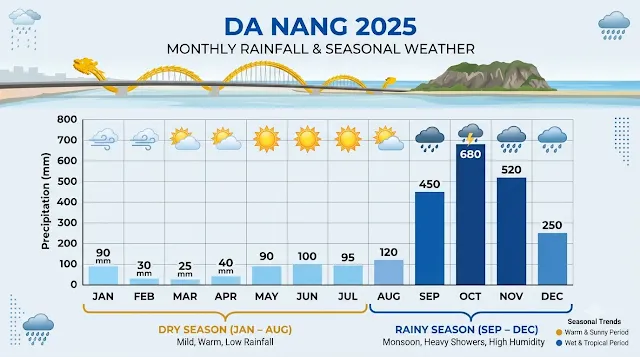 |
| Seasonal weather changes in Da Nang throughout the year. |
What Is the Best Time to Visit Da Nang?
The best time to visit Da Nang depends on what you want to experience. For many travelers, March to May offers a particularly appealing combination of warm temperatures, sunshine and generally lower rainfall.
September and October can also have warm days, but rainfall increases significantly during this period, so outdoor plans may be less predictable.
Best Time for Beach Holidays
If your main purpose is to enjoy the beach, consider the drier months, particularly from March to July. These months generally provide more opportunities for sunny beach days.
Always check local sea conditions before swimming. Strong winds, waves or safety warnings can make the sea unsuitable even when the sky looks clear.
Best Time for Sightseeing
March and April are attractive months for exploring Da Nang's landmarks, visiting the Marble Mountains, discovering the Son Tra Peninsula and enjoying outdoor activities.
May can also be suitable, although the weather becomes hotter.
Best Time for Visiting Hoi An
Hoi An is a popular day-trip destination from Da Nang. The relatively drier months are often more convenient for walking through the Ancient Town, visiting heritage houses and enjoying riverside scenery.
During rainy periods, check local conditions before planning boat trips or other outdoor activities.
Best Time for a Relaxing Resort Holiday
Travelers who want to enjoy a private villa, swimming pool or coastal resort may prefer the sunnier months. However, accommodation facilities and indoor amenities can also make a rainy-season stay enjoyable.
 |
| Cloudy mountain weather at Golden Bridge in Ba Na Hills Da Nang |
What to Wear in Da Nang
Choosing suitable clothing depends on the month and the activities you have planned. Because Da Nang is warm for much of the year, lightweight and breathable clothing is useful for most trips.
During the Dry Season
Consider packing:
Lightweight T-shirts and breathable clothing.
Shorts, dresses and comfortable trousers.
Swimwear for beach and pool activities.
Sunglasses and a wide-brimmed hat.
Sunscreen and comfortable walking shoes.
During the Rainy Season
Consider bringing:
A compact umbrella or lightweight rain jacket.
Quick-drying clothing.
Waterproof sandals or shoes with good grip.
A small waterproof bag for electronic devices.
A light jacket for cooler or windy evenings.
If you plan to visit Ba Na Hills or other mountainous areas, bring an extra layer because temperatures can be cooler than in the city.
 |
| Essential travel items for Da Nang weather and tropical climate |
How Weather Affects Popular Activities in Da Nang
Weather can influence what you do during your trip. Planning activities around the conditions can help you enjoy the city more comfortably.
Beaches and Swimming
Sunny weather is generally more suitable for relaxing at My Khe Beach and other coastal areas. However, always follow local swimming instructions and pay attention to sea conditions.
Marble Mountains
The Marble Mountains are an outdoor attraction with steps, viewpoints, caves and pagodas. Dry weather can make walking and climbing more comfortable. After rain, some paths and steps may become slippery.
Son Tra Peninsula
Son Tra offers coastal scenery, forested landscapes and viewpoints. Clear weather can provide better visibility, while rain and strong winds may make some outdoor routes less comfortable. Check local access and safety information before setting out.
Ba Na Hills
Ba Na Hills is located in a mountainous area, where weather can differ from the city. Temperatures may be cooler, and clouds or mist can affect visibility. Check the mountain forecast separately when planning your visit.
Hoi An Ancient Town
Hoi An is enjoyable in different weather conditions, but walking through its streets is generally easier during dry periods. During heavy rain, riverside areas may be affected by changing water levels, so follow local guidance.
 |
| weather in Hoi An Ancient Town near Da Nang Vietnam |
Practical Weather Tips for Travelers
A little preparation can make your trip more comfortable, regardless of the season.
Check the forecast before each day: Weather can change quickly, especially during the rainy season.
Plan outdoor activities early: Morning hours are often more comfortable during hot months.
Bring sun protection: Sunscreen, sunglasses and a hat are useful throughout much of the year.
Keep rain protection available: A small umbrella or rain jacket can be helpful even outside the main rainy season.
Check sea conditions: Do not assume that a sunny day always means safe swimming conditions.
Allow flexibility in your itinerary: Keep alternative indoor activities in mind during rainy periods.
Check mountain weather separately: Conditions at Ba Na Hills and other elevated areas may differ from central Da Nang.
Follow official weather warnings: Pay attention to local announcements during storms, heavy rain or flooding.
Frequently Asked Questions About Da Nang Weather
Is Da Nang hot all year round?
Da Nang is generally warm throughout the year because it has a tropical monsoon climate. However, temperatures are usually cooler during the winter months, particularly from December to February.
When is the rainy season in Da Nang?
Rainfall generally increases from around August or September and is often heaviest in October and November. The exact timing can vary from year to year.
What is the driest month in Da Nang?
February is typically one of the driest months according to long-term monthly climate data. March and April also generally have relatively low rainfall.
What is the hottest month in Da Nang?
June is generally among the hottest months, with average temperatures around 30°C in the JMA monthly climate normals. Actual daytime temperatures can be higher.
Is it worth visiting Da Nang during the rainy season?
Yes. You can still enjoy local food, cafés, museums, shopping and indoor attractions. However, heavy rain or storms may affect beaches, boat trips and outdoor excursions, so keep your plans flexible.
Does Da Nang have typhoons?
Da Nang and the surrounding central coast can be affected by tropical storms and typhoons, particularly during the wetter part of the year. Travelers should monitor official weather warnings and follow local safety instructions.
Is Da Nang colder than Hoi An?
The two destinations are geographically close and generally experience similar regional weather patterns. Local conditions can still vary, especially during rain and storms.
Final Thoughts: Plan Your Trip Around Da Nang’s Weather
Da Nang is a year-round destination with warm temperatures, beautiful beaches and a variety of cultural and outdoor attractions. However, choosing the right travel period can make a difference to your experience.
March to May is a particularly good period for many visitors who want warm, relatively dry weather. The summer months are attractive for beach holidays but can be hot, while October and November are usually much wetter.
Before travelling, check the latest Da Nang weather forecast and adjust your itinerary according to local conditions. With suitable preparation, you can enjoy the best of Da Nang and nearby Hoi An in every season.